
6 Brain Health Apps Worth Trying in 2026
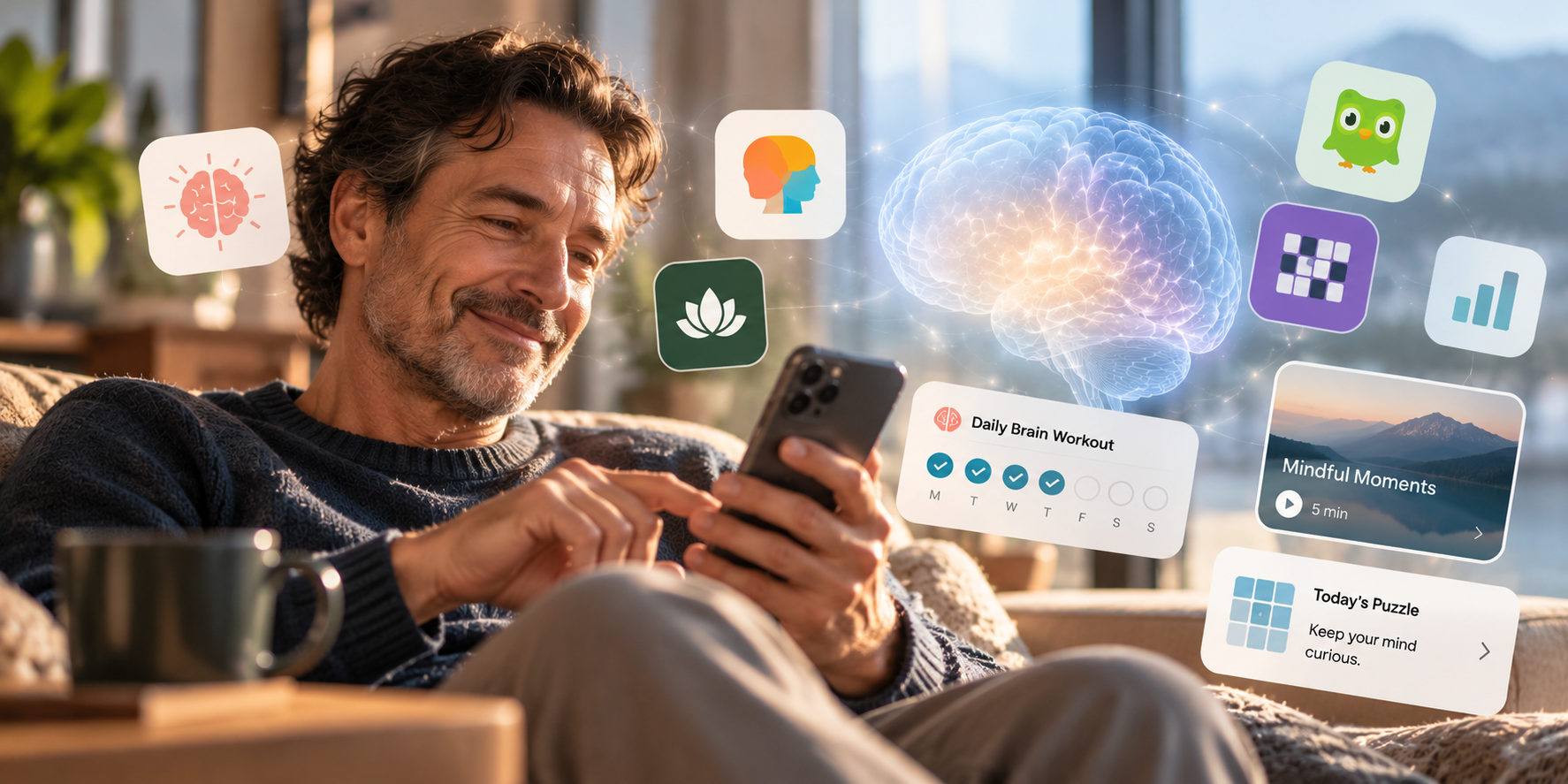
Looking for a fun way to challenge your mind? These apps make it easy to add a little mental stimulation to your everyday routine.
We hear a lot about keeping our bodies active, but what about our brains?
Just like physical activity, mentally stimulating activities can be an enjoyable part of a healthy lifestyle. Whether you're solving a crossword, learning a new language, or challenging your memory, finding ways to stay curious and engaged is worthwhile at any age.
And thanks to technology, there are plenty of ways to get started right from your phone.
From quick daily puzzles to personalized brain-training programs, we've rounded up six apps worth exploring in 2026.
1. Lumosity: For People Who Love a Good Challenge
Best for: Memory games, attention, and problem-solving
Cost: Free basic version, with an optional paid subscription for premium features.
If you enjoy puzzles that make you stop and think, Lumosity might be right up your alley.
One of the most recognizable brain-training apps, Lumosity offers a collection of games designed to challenge skills like memory, attention, processing speed, and problem-solving.
The app creates personalized daily workouts based on your performance, with games that adapt as you progress.
You might find yourself remembering patterns, spotting differences, or solving challenges against the clock.
And because most games only take a few minutes, it's easy to fit a little mental activity into your morning coffee break.
Why we like it: The games are colourful, engaging, and varied enough to keep things interesting.
Try it: Lumosity
2. BrainHQ: For a More Research-Focused Approach
Best for: Structured cognitive training
Cost: Limited free exercises, with a paid subscription for full access
If you're interested in the science behind brain training, BrainHQ is worth exploring.
Developed by Posit Science, BrainHQ offers exercises designed to challenge attention, memory, processing speed, and other cognitive skills.
Unlike traditional puzzle apps, BrainHQ focuses on structured exercises that adapt to your abilities over time.
The platform has also been studied in clinical research, including studies involving older adults.
It's important to understand that results from specific cognitive-training studies don't necessarily apply to every app or exercise. Still, BrainHQ offers an interesting option for people who enjoy a more structured approach.
Why we like it: The exercises are designed to adjust to your performance, allowing you to work at a level that feels appropriately challenging.
Try it: BrainHQ
3. Elevate: For Everyday Mental Skills
Best for: Reading, writing, math, and concentration
Cost: Free basic version, with premium features available
Ever catch yourself struggling to calculate a tip or searching for just the right word?
Elevate turns everyday mental skills into quick, interactive challenges.
The app focuses on practical activities involving reading comprehension, vocabulary, mental math, memory, and communication.
After an initial assessment, Elevate creates a personalized training program that adjusts as you use it.
Its clean design and bite-sized exercises make it particularly appealing for anyone who prefers activities that feel connected to everyday life.
Why we like it: Rather than focusing exclusively on abstract puzzles, Elevate gives you opportunities to practise skills you regularly use.
Try it: Elevate
4. Duolingo: For Learning Something Completely New
Best for: Language learning and lifelong curiosity
Cost: Free version available, with optional paid subscriptions
Who says brain health activities have to look like brain-training games?
Learning something new can be a rewarding way to stay mentally engaged, and Duolingo makes it easy to get started.
The popular language-learning app uses short lessons, interactive exercises, and playful challenges to introduce new vocabulary, grammar, and conversational skills.
Whether you've always wanted to learn French, brush up on your Spanish, or try something entirely different, you can practice at your own pace.
The app also includes progress tracking and daily reminders to help make learning a regular habit.
Why we like it: Learning a language offers something beyond completing a game. It's an opportunity to explore new cultures, develop a skill, and perhaps even connect with new people.
Try it: Duolingo
5. NYT Games: For Your Daily Puzzle Fix
Best for: Word games, logic, and problem-solving
Cost: Some games are free, with a subscription required for additional access
There's something satisfying about finally solving a tricky crossword clue.
NYT Games brings together popular daily puzzles, including Wordle, Connections, Sudoku, and the classic New York Times Crossword.
Each game challenges you in a slightly different way.
Wordle encourages vocabulary and deduction, Connections asks you to identify relationships between words, and Sudoku puts your logical thinking to work.
You can play independently, compare results with friends, or make a daily puzzle part of your morning routine.
Why we like it: It's simple, familiar, and offers plenty of variety. Plus, sharing your results with friends or family can turn a solo activity into a fun social tradition.
Try it: NYT Games
6. Headspace: For Mindfulness and Mental Well-Being
Best for: Mindfulness, relaxation, and sleep routines
Cost: Paid subscription, with trial options
Not every brain-healthy habit needs to involve solving a puzzle.
Making time to relax, manage stress, and prioritize sleep is another important part of supporting overall well-being.
Headspace offers guided meditations, breathing exercises, sleep resources, and mindfulness activities designed to help people build these habits.
Whether you have a few minutes between appointments or want help winding down at the end of the day, the app offers exercises for different needs and experience levels.
It's not a traditional brain-training app, and it shouldn't be viewed as a tool for preventing cognitive decline. Instead, it can complement other healthy routines by supporting relaxation and emotional well-being.
Why we like it: It's a reminder that caring for your brain isn't always about doing more. Sometimes, it's about making space to rest.
Try it: Headspace
Can Brain-Training Apps Actually Improve Brain Health?
It's a fair question, especially when so many apps promise to sharpen your memory or improve your thinking.
The answer is a little more complicated than the marketing might suggest.
Research has found that certain types of cognitive training can improve performance on specific mental tasks. However, getting better at a brain-training game doesn't necessarily mean those improvements will carry over into everyday life.
And importantly, there isn't enough evidence to conclude that commercially available brain-training apps can completely prevent dementia.
That doesn't mean these apps aren't worth exploring. There is evidence that challenging your brain in these ways can help reduce your overall lifetime risk of dementia.
Puzzles, games, and learning activities can also provide enjoyment, encourage curiosity, and offer opportunities to challenge yourself.
The key is to think of them as one part of a broader approach to brain health, rather than a guaranteed solution.
Beyond the Apps: Everyday Ways to Support Brain Health
While technology can make mental activities more accessible, supporting brain health goes well beyond your phone.
Regular physical activity, meaningful social connections, quality sleep, and managing health conditions are all important parts of maintaining overall health as we age.
And you don't need an app to keep learning.
Reading a book, trying a new recipe, joining a community class, or picking up a hobby can all offer opportunities to stay curious and engaged.
The best activity is often one you genuinely enjoy and want to keep doing.
A Little Curiosity Goes a Long Way
You don't need to spend hours completing complicated exercises to make room for mentally stimulating activities in your day.
Maybe it's five minutes of Wordle with your morning coffee, a language lesson on your lunch break, or a relaxing meditation before bed.
What matters is finding activities that feel enjoyable, meaningful, and right for you.
So, if one of these apps catches your attention, give it a try. You might discover a new favourite way to spend a few minutes.
Want to learn more about brain health and healthy aging?
Explore StillMe for more information, practical tips, and resources to help you stay informed.
CTA: Explore More Brain Health Resources
Disclaimer: StillMe does not receive compensation from or endorse any of the apps featured in this article. These recommendations are shared for informational purposes only.