What Bruce Willis Quietly Taught Us About the Way We See People
For most people, Bruce Willis will always be an icon.
Maybe it’s because his movies were always on TV growing up. Maybe it’s because he has that rare kind of presence that makes him feel both larger-than-life and strangely relatable at the same time. He wasn’t polished in the way many other celebrities were. He felt human, like us. Funny without trying too hard. Cool without looking like he cared whether people thought he was cool.
For years, the world mostly saw him one way: capable, sharp, untouchable.
Then people started noticing changes.
Clips online began circulating. Interviews felt quieter. Public appearances sparked speculation. People started asking questions in the way the internet always does when someone no longer fits the version of them we’ve frozen in our minds.
But it wasn’t until his family shared what was actually happening, that people started seeing it differently.
What’s interesting is how quickly the tone changed afterward.
The same people who once commented on how “different” he seemed suddenly started speaking about him with softness. The conversation became gentler. More protective. More understanding.
Nothing about Bruce Willis changed overnight.
People’s perspective did.
It says a lot about how uncomfortable we are with seeing people age publicly. Especially people we’ve attached to strength, confidence, charisma, action-hero energy. We expect people to remain recognizable to us forever, and when they don’t, society often doesn’t know how to react.
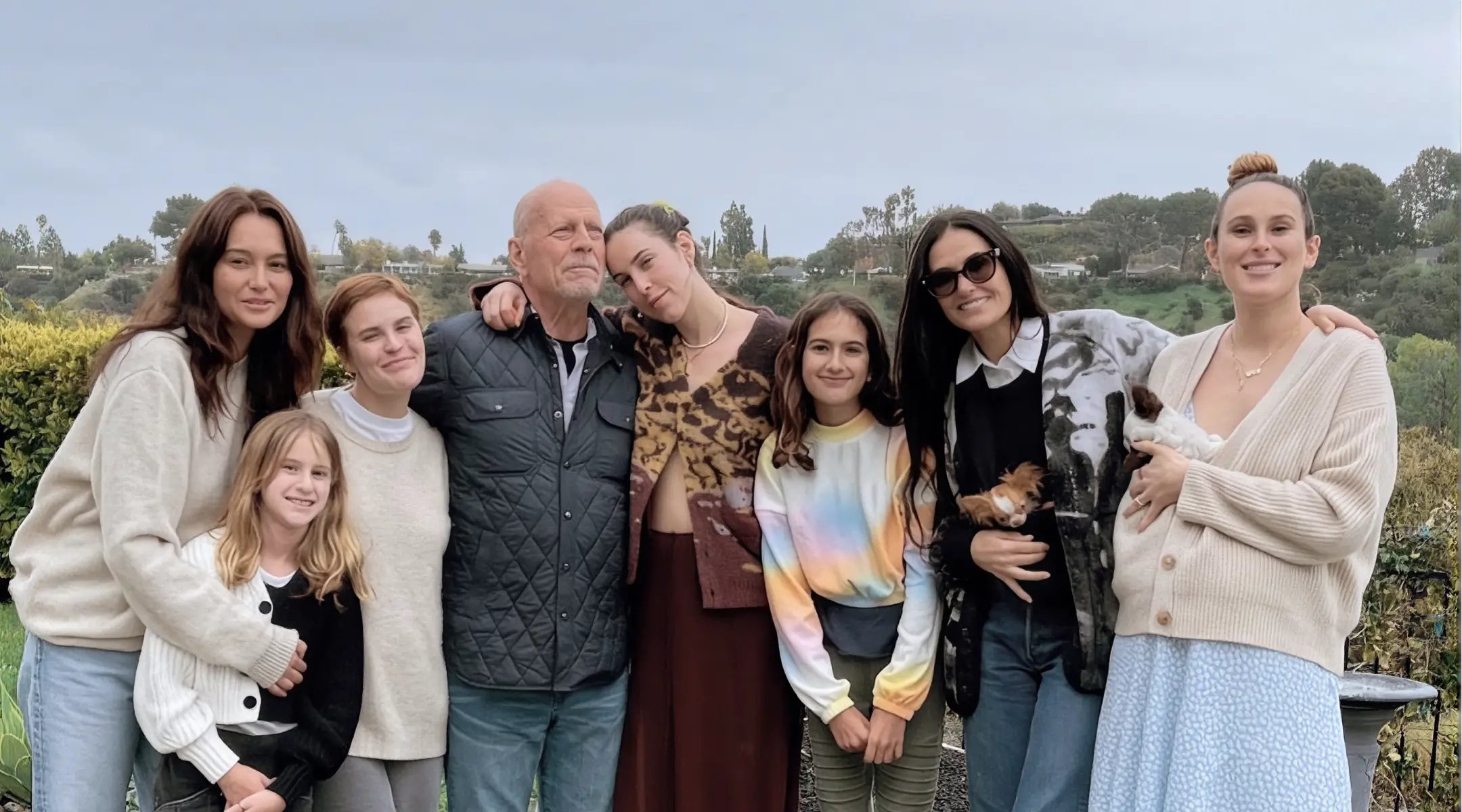
But the beautiful thing about the way Bruce Willis’s family has shared parts of this chapter is that they never stopped showing him as fully himself.
It wasn’t because he was in a headline, or the face of a diagnosis, or as a tragic story.
It was because we got to see just Bruce.
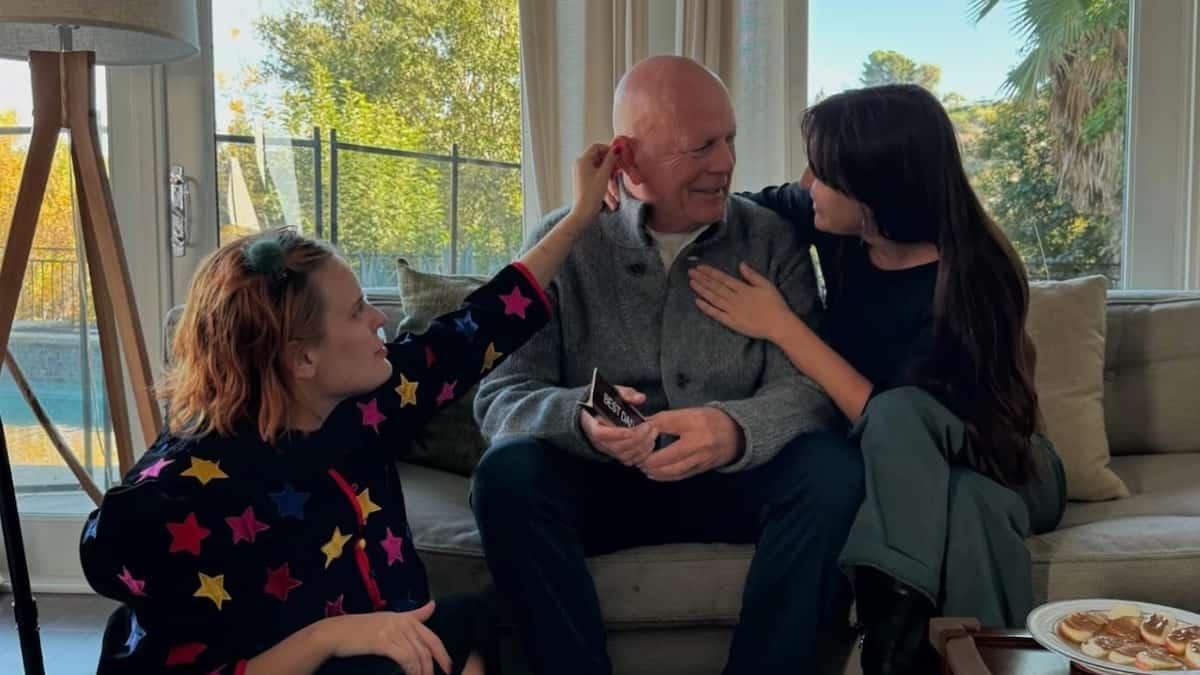
In their photos, he’s sitting around the table with family. Laughing during birthdays. Holding his daughters. Dancing to music. Wrapped in ordinary moments that still feel full of warmth, personality, and connection.
And that’s the part people responded to most.
Not because the situation was unfamiliar to families, but because it felt familiar.
A lot of people know what it’s like to watch someone they love change over time. A parent who moves a little slower now. A grandparent who repeats stories. Someone who needs more patience than they used to.
The fear people carry around aging is rarely just about getting older itself. Perhaps it’s the fear of becoming invisible because of it.
That’s why representation like this matters more than people realize.
When public stories about aging only focus on loss, people start to associate growing older with disappearance. As if someone slowly stops being themselves, the second life becomes less convenient or predictable.
But Bruce Willis’s family never framed him that way.
They kept showing joy. Humour. Presence. Love.
There’s something incredibly comforting about seeing a family continue to gather around someone exactly as they are instead of mourning them while they’re still here.
And maybe that’s the bigger thing people connected to.
Not sadness. Recognition.
Recognition that people are still people through every stage of life.
Still funny. Still stubborn. Still warm. Still capable of making someone laugh at dinner. Still deserving of inclusion, patience, affection, conversation, eye contact, and celebration.
Still themselves.
Our culture moves quickly. People are rewarded for productivity, speed, independence, and being “on” all the time. There’s very little room for slowness. Very little grace for people whose lives or abilities shift.
But watching the public response to Bruce Willis evolve felt like seeing people collectively pause for a second.
People became softer.
And maybe that’s the whole point.
Maybe the goal isn’t pretending aging is easy or pretending change never happens. Maybe it’s learning how to continue showing up for people fully through those changes instead of pulling away from them.
Because getting older was never supposed to mean becoming less worthy of connection.
If anything, it should mean the opposite.